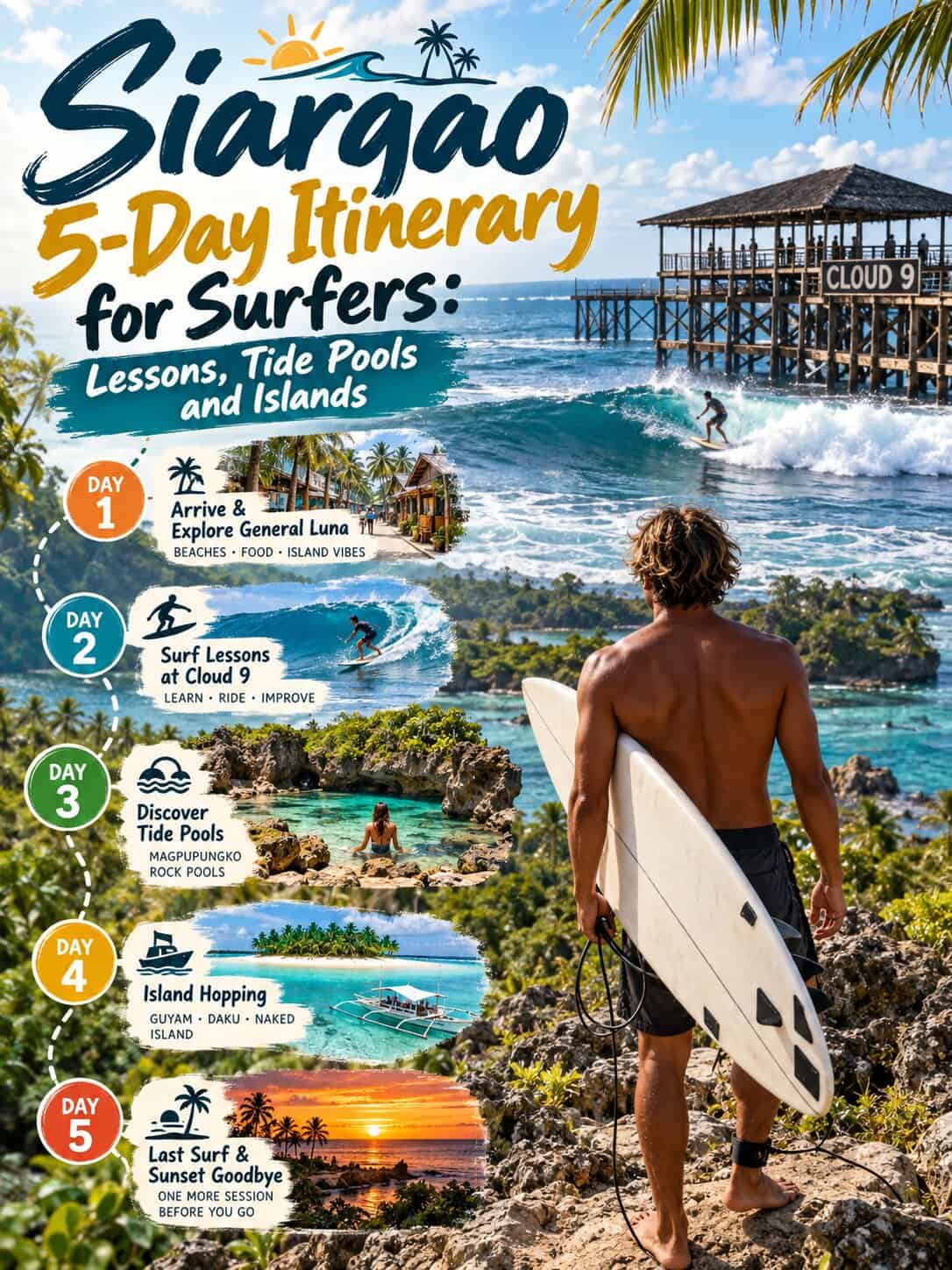
This Siargao 5-day itinerary is built around surf: an easy arrival, two lesson mornings at the Cloud 9 end of General Luna, a tide-pool day at Magpupungko, an island-hopping day, and a buffer before you fly out. It works for first-timers who want to stand up on a board and for intermediate surfers who want to ride the reef breaks without wasting days on logistics. If you are still deciding whether the island suits you, start with the Siargao destination guide.
How to Use This Siargao 5-Day Itinerary
New to the island? Start with our Siargao travel guide for the full overview. Siargao is a teardrop-shaped island off the northeast of Mindanao, and almost every visitor bases themselves in or near General Luna, the surf town on the southeast coast. Cloud 9 is close to town, while Magpupungko and the other northern attractions take a much longer ride up the coast. The plan below deliberately puts the two most weather- and tide-dependent days (surfing and Magpupungko) in the middle, so you can swap days around if conditions change. Three planning rules shape the whole schedule:
- Tides decide Magpupungko. The rock pools are only really swimmable around low tide, so check a tide table the day before and pick your day accordingly.
- Surf is best early. Mornings are usually glassier; winds tend to pick up later in the day.
- Keep a flex day. A rain squall or a flight change can eat a day, so the itinerary has a built-in rest day and a departure buffer.
Before You Go: Flights and Timing
For route and airport details, see Flying to Siargao: Routes and Airport Transfers. Most travellers arrive by air into the island’s airport and then transfer by van, tricycle or motorbike taxi to General Luna. The drive from Sayak Airport takes roughly 30 to 45 minutes, so a morning arrival still leaves time to settle in before the afternoon session. Routes and schedules change, so use our guide to flying to Siargao to plan the journey, and book your return with a generous margin, because a missed flight on a small island is expensive and inconvenient. Overland travellers can also reach the island by ferry from the mainland (ferries run from Surigao City to Dapa Port and take roughly 2 to 4 hours depending on the vessel), but that adds time and weather risk to a short trip. Timing matters more than most people expect. The island has a well-known surf season and a quieter off-season, which we cover below, and the Philippines’ typhoon and rainy patterns are explained in our best time to visit the Philippines guide. Check the official forecasts at PAGASA in the days before you travel.
Day 1: Arrival and an Easy Evening
Land, transfer to General Luna, check in and resist the urge to do too much. Rent a motorbike only if you are an experienced rider and hold the right licence; otherwise use tricycles, vans or a driver for the day, and always wear a helmet. Roads are generally fine near town but can be wet, sandy or uneven elsewhere.
Scooter rental runs about ₱350 to ₱500 per day. Visitors with a valid driver’s license from their home country may ride for up to 90 days after arrival, and a Philippine license is required after that, so carry the physical license with you.
- Afternoon: walk the main strip, get your bearings, and book your lesson or board rental for the next morning.
- Late afternoon: stroll or ride out toward the Cloud 9 boardwalk and observation tower to watch the surfers. Seeing the break first makes the lesson less intimidating.
- Evening: eat locally, drink plenty of water, and sleep early. A dawn lesson is much easier when you are rested.
Day 2: Surf Lesson at Cloud 9
For a deeper dive into the break, see our Cloud 9 Siargao surfing guide. Cloud 9 is Siargao’s famous reef break and the reason most people come. It is a powerful wave breaking over shallow reef, so it is not a casual beginner spot on every day. Our dedicated guide to Cloud 9 and surfing in Siargao explains the breaks in detail. For lessons, good schools choose the spot based on the tide, swell and your level, so follow your instructor’s call rather than insisting on a particular wave. Lessons are priced per hour, in a range of ₱500 to ₱1,100 across schools, and Jacking Horse, a friendlier reef near Cloud 9, is a gentler option for learners.
Plan for beginners
- Morning: a two-hour lesson with a certified instructor. Expect beach-based technique first (paddling, pop-up, safety) and then foam-board practice in whitewater or small waves.
- Midday: lunch, shade, and rest. Surfing is more tiring than it looks, especially for shoulders.
- Afternoon: light activity only, such as a swim, a massage or a walk along the boardwalk. Wear reef-safe sun protection and a rash vest.
Intermediate variant
If you already surf, skip the lesson and instead hire a board and, ideally, a local guide or boatman for your first session. Reef breaks demand respect: shallow coral, strong currents and local etiquette all matter. Spend the first morning on a forgiving break, then step up to Cloud 9 itself on a day when the size and tide suit you. Cloud 9 works best on a mid-to-high tide and turns shallow, with stronger currents, at low tide, while Jacking Horse is friendliest at mid tide. Never paddle out to a crowded peak without watching it for a while first.
Which Break for Which Level
| Break | Level | Best conditions | Notes |
|---|---|---|---|
| Cloud 9 | Advanced when the swell is solid | Northeast wind, mid-to-high tide | Heavy, hollow right over sharp reef; strong currents, and shallow at low tide |
| Jacking Horse | Moderate | Mid tide | Friendlier reef near Cloud 9; crowded in season; mind the inside reef at low tide |
Wear reef booties at every reef break and add a helmet at Cloud 9, where one is highly recommended. Watch for sea urchins, expect strong rips on bigger days, and avoid jumping feet-first onto the reef; time your entry and exit with the sets. Marine sanctuaries have their own rules, so ask locally before paddling out.
Day 3: Second Surf Session and a Slow Afternoon
Repeat your morning session. Beginners improve fastest on consecutive days, and day three is usually when the pop-up starts to feel natural. Book a shorter session if your body is sore. Intermediate surfers can use the day to try a second break or to take a short surf trip by boat if conditions are flat at home base. In the afternoon, rent a bicycle or ride out to look at some of the island’s landscapes, such as palm-lined roads, mangrove edges and quiet beaches. This is also a good moment to plan the next two days around the tide table.
Day 4: Magpupungko Tide Pools
Magpupungko Rock Pools, on the east coast of the island near Pilar, are a series of natural tidal pools fringed by a flat rock formation. At low tide the pools fill with calm, clear water suitable for swimming, and at high tide the area is largely submerged. Because of this, the visit should be timed to the tide, not to your convenience: arrive before the best low tide window and leave before the water returns. Count on about 45 minutes each way by road from General Luna. Low tide is also when Cloud 9 turns shallow, so if the best low tide falls in the morning, that is the day to swap Magpupungko in.
- Check the tide table the night before and confirm local access rules and any fees on arrival.
- Bring water shoes, since the rock can be sharp and slippery, along with a dry bag for valuables.
- Combine the trip with other stops on the way, such as beaches and viewpoints, so the journey is not wasted if the tide is not ideal.
- Go with a driver or a reliable ride, because the round trip is long enough to be tiring on a motorbike if you are not used to it.
Day 5: Island Hopping and a Sunset
The classic boat trip from General Luna visits a trio of small islands off the coast: Naked Island (a sandbar with no trees), Daku Island (a larger island and the usual stop for a seafood lunch) and Guyam Island (a tiny palm-topped islet). The trip usually includes swimming, snorkelling and a beach lunch. Shared trips cost ₱1,200 to ₱1,500 per person and usually include lunch, while a ₱100 local tourism fee, a ₱20 environmental fee and a small Guyam entrance fee are paid separately. Tours are weather-dependent and are cancelled when the sea is rough, so keep this day flexible. Plan to be back by mid-afternoon, then take a sunset session on the beach with a drink. If you want a more adventurous option, ask your host about full-day trips to other parts of the island group, although these are longer and more weather-dependent.
Guyam has no public power and no phone signal, so charge your phone and download offline maps before you leave General Luna. A fresh coconut on the island costs ₱50, and small peso bills help with boatmen and entrance fees. Wear the life jacket during the crossing, do not step on living coral, and carry your trash back with you.
Departure Day and Buffer Time
If you must fly out on the fifth evening, the plan above still works, but drop the island-hopping day to a half day and keep the afternoon free for the transfer. Whenever possible, schedule your departure for the day after your last planned activity. A buffer day absorbs delays and lets you do something low-key such as a final surf, a souvenir stop or a long lunch. Leave plenty of time for the airport transfer and check-in, and confirm your flight status with the airline directly.
Surf Season vs Off-Season
Timing a trip around the WSL event at Cloud 9? Check our Philippines events in November guide — this Siargao 5-day itinerary works equally well built around it. Siargao has a reputation for its strongest surf in the later part of the year, roughly from around September into November, when swells arrive more reliably and the main breaks are at their best. This is also when the island is busiest and the breaks are most crowded. The rest of the year has smaller, gentler waves, which can actually suit beginners well, but conditions vary a lot day to day. Treat the dates as a general pattern, not a promise. December to February brings the heaviest rain, while March to May usually means hot, clear days, calm seas and smaller, glassy longboard waves, which makes it the easiest window for the island-hopping day.
| Factor | Surf season | Off-season |
|---|---|---|
| Waves | Larger, more powerful reef surf | Smaller, more variable, often gentler |
| Best for | Intermediate and advanced surfers | Beginners, non-surfers, relaxed travel |
| Crowds | Busier lineups and accommodation | Quieter, easier to book last minute |
| Weather risk | Typhoon and rain risk exists | Rain and wind can still change plans |
| Itinerary tweak | Spend more time on surf, less on tours | Add more island-hopping and land activities |
In the off-season, beginners can spend the same two mornings in the water, but should add a third lesson or a longer day-two session if the waves are small. In peak season, book lessons and boards ahead.
Rain-Day Backups
Showers can pass quickly, but a storm can close the sea to boats and make the roads miserable, which is why this Siargao 5-day itinerary keeps a backup plan on hand. Have a plan B ready:
- Café and coworking time: General Luna has plenty of cafes, good for waiting out a squall.
- Spa and massage: a good use of a day after surfing.
- Cooking or yoga classes: many studios and hostels offer drop-in sessions.
- Swap your days: if the weather is better tomorrow, move island hopping or Magpupungko there, and take the rest day today.
- Surf in the rain: light rain is not usually a problem for surfing, but avoid the water during thunder or lightning.
If a typhoon is forecast, follow local advice, and check our typhoon season guide for how disruptions typically work and what to do about flights and bookings.
Rough seas are the main threat to boat days. From December to February they can cancel tours to Sugba Lagoon and Sohoton Cove, so book those with a flexible policy. In the habagat months (June to September) the west coast is calmer, which makes the Del Carmen mangrove rivers and west-coast beaches a workable fallback when the east side is rough.
Where to Stay by Area
Compare options in our best surf hotels in Siargao roundup. You do not need to book a particular property to enjoy this itinerary, but the area matters more than the brand. Our guide to the best surf hotels in Siargao covers specific options, and here is how the main areas compare:
- General Luna centre: the best choice for first-timers. Restaurants, bars, surf schools and board rentals are all within walking distance, which means less time on the road. It can be noisy at night.
- Cloud 9 side: close to the main break and the boardwalk, ideal if surfing is the main goal and you want to be in the water at dawn.
- Quieter beaches north and south of town: calmer, more spread out and better for couples or families, but you will need transport to reach the busier part of town.
- Further afield (Pilar, Dapa, Del Carmen): suited to a second stay later in the trip or for travellers who want a slower pace; less convenient for a short surf trip.
Accommodation styles range from simple hostels and homestays to boutique resorts, and prices vary with season. For stays in peak months, reserve ahead and check cancellation terms.
Holy Week is the busiest week of the year, and rooms are best booked four to six months ahead.
Summary Table
| Day | Plan | Beginner focus | Intermediate focus |
|---|---|---|---|
| 1 | Arrival, settle in | Book lesson, watch the break | Scout breaks, hire a board |
| 2 | Cloud 9 area surf | Two-hour lesson | Warm-up session, then bigger break |
| 3 | Second surf day | Build on pop-ups | Try a second spot |
| 4 | Magpupungko tide pools | Time for low tide | Same, or a later surf |
| 5 | Island hopping and sunset | Swim and snorkel | Swim and snorkel |
| Buffer | Departure | Flex time | Optional final surf |
What the Paid Items Cost
The paid stops in this plan with their prices. Lesson length, school and the number of days you rent a scooter change the total.
| Item | Day | Price |
|---|---|---|
| Surf lesson with an instructor | 2 and 3 | ₱500 to ₱1,100 per hour, depending on the school |
| Scooter rental | 1 to 5 | ₱350 to ₱500 per day |
| Shared tri-island tour | 5 | ₱1,200 to ₱1,500 per person, usually including lunch |
| Local tourism fee (mandatory) | 5 | ₱100 |
| Environmental fee for island hopping | 5 | ₱20 |
| Guyam Island entrance | 5 | ₱30 to ₱50 per person |
| Fresh coconut on Guyam | 5 | ₱50 |
Practical Tips
- Bring or buy reef-safe sunscreen, a rash vest, and a hat; the sun is strong year-round.
- Carry some cash for small vendors, boat fees and tricycles, as cards are not accepted everywhere. ATMs on the island sometimes run out of cash, so bring a backup supply; GCash and cards are increasingly accepted in General Luna. A reusable water bottle saves money, since cafes usually offer free or cheap refills. For more on money, see the central bank and our general travel guides.
- Reef cuts happen: clean them promptly and carry basic first aid.
- Respect local surf etiquette: the surfer closest to the peak has priority, and do not drop in.
- Check the visa and entry rules via the Bureau of Immigration or our visa guide before you travel.
Frequently Asked Questions
Quick answers to the questions this Siargao 5-day itinerary gets asked most often.
Is five days enough for Siargao?
Yes, for a first visit. Five days covers a couple of surf sessions, the tide pools and a boat trip with some rest. Surf-focused travellers often stay longer to improve more.
Can a complete beginner learn to surf in Siargao?
Yes. Many schools teach beginners, often at gentler breaks around General Luna. Choose an instructor who adapts to conditions and uses suitable foam boards.
When is the best month for Siargao surf?
The stronger surf generally arrives in the later part of the year, but conditions vary. Beginners often do just as well in smaller-wave months. Check current forecasts before you book.
Do I need to rent a motorbike?
No. Tricycles, vans and drivers are available, and they are safer if you are not an experienced rider. If you do ride, wear a helmet and carry the correct licence.
What if it rains the whole time?
Swap activities around, use the rest day, and surf in light rain if it is safe. Keep a flexible booking for island hopping and a buffer day before your flight.
Can I visit Magpupungko at any time?
Not really. The pools are best at low tide, so plan around a tide table and check local rules on arrival.
Bottom Line: Siargao 5-Day Itinerary Wrap-Up
A good Siargao trip is simple: arrive calm, surf two mornings, time Magpupungko to the tide, take one boat day, and keep a buffer before you leave. Stay in General Luna if it is your first time, adjust the plan to the season, and keep every weather-dependent activity flexible.